

Hunting for the Best Phones Under $300 (2025)? This in‑depth, education‑first guide compares real‑world value, explains trade‑offs, and helps you pick a phone that actually feels fast, takes reliable photos, and lasts. You’ll find our hand‑picked list of winners, a spec comparison table, practical buying tips, setup advice to make budget hardware feel snappy, and guidance on networks, updates, and battery care. Prices vary by region and season, so we focus on models that consistently sell near or below $300 or dip under that mark during promos.
Before we dive in, a quick note: specs differ by market and RAM/storage tiers, and retailers often reuse names for multiple variants. Use this guide as a smart shortlist, then confirm the exact SKU and supported bands with your local seller or carrier. With that, let’s find the best phone under $300 for your needs in 2025.
Table of Contents
How we select the Best Phones Under $300 (2025)
The $300 bracket is a sweet spot: step‑up features without breaking the bank. Our picks are guided by practical value and long‑term usability:
- Responsiveness over raw hype: We favor efficient chips (e.g., Snapdragon 6/7‑series, recent Dimensity families, modern Exynos) that keep the UI smooth and battery usage in check.
- Memory matters: Aim for 6–8 GB RAM. For storage, 128 GB is a baseline in 2025; microSD expansion is a plus if you shoot lots of photos and video.
- Displays you enjoy daily: FHD+ resolution and 90–120 Hz refresh are common at this price. AMOLED/OLED panels often appear—great for contrast and readability.
- Cameras that are consistent: A well‑tuned main sensor with solid HDR beats a high megapixel count with weak processing. OIS (optical stabilization) is a bonus for low light.
- Battery and charging: ~5,000 mAh is the norm; 25–67 W charging cuts downtime. We value charging safety and sensible thermal management over headline wattage.
- Update track record: Multi‑year security patches and at least one or two platform upgrades extend life. Clean software helps budget hardware feel faster.
- Network fit and extras: Check your carrier’s LTE/5G bands. Useful perks include NFC (region‑dependent), stereo speakers, IP rating/splash resistance, and eSIM/dual SIM.
Top picks at a glance
Availability and pricing vary. The models below regularly hover around $300 or drop under during promotions. Confirm local SKUs and bands.
- Best overall balance: Samsung Galaxy A25 5G — 120 Hz AMOLED, dependable battery life, and multi‑year updates make it a safe everyday pick.
- Best fast charger + smooth UI (US friendly): OnePlus Nord N30 5G — speedy charging and responsive performance for the price.
- Best performance value: POCO X6 — sharp 120 Hz AMOLED, capable mid‑tier chip, and fast charging that often dips under $300.
- Best OLED under $300 (global): Redmi Note 13 5G — 120 Hz AMOLED and a high‑res main camera at a very friendly price.
- Sale pick to watch: Samsung Galaxy A34 5G — when it drops near $300, you get a bright AMOLED, solid chip, and a polished UI.
- Battery endurance king (US): Moto G Power 5G (2024/2025) — large battery, clean interface, and a big FHD+ screen for media.
- Repair‑friendly choice: Nokia G42 5G — parts and guides available; long‑term savings if you keep phones for years.
- Best budget camera processing (sale/refurb): Google Pixel 6a — older but stellar photo quality; great when found under $300.
- Big battery AMOLED (select markets): Samsung Galaxy M34 5G — 6,000 mAh endurance with a smooth AMOLED panel.
- Polished all‑rounder (regional): realme 12 5G — modern design, fast refresh display, and reliable day‑to‑day speed.
Comparison table
Specs differ by region and storage tier. Use this table as a compass, then verify the exact model number, bands, and charger in the box for your market.
| Phone | Display | Chipset (class) | Memory | Main Camera | Battery / Charging | 5G | Notable extras | Typical price |
|---|---|---|---|---|---|---|---|---|
| Samsung Galaxy A25 5G | 6.5″ FHD+ AMOLED, 120 Hz | Exynos 1280 (efficient mid) | 6–8 GB / 128–256 GB + microSD | ~50 MP main, OIS on many variants | ~5000 mAh / up to 25 W | Yes | NFC (region), multi‑year updates | ~$249–$299 |
| OnePlus Nord N30 5G | 6.7″ FHD+ LCD, 120 Hz | Snapdragon 695 (balanced) | 8 GB / 128–256 GB + microSD | High‑res main camera | ~5000 mAh / up to 67 W | Yes | Fast charging, OxygenOS polish | ~$249–$299 |
| POCO X6 | 6.67″ FHD+ AMOLED, 120 Hz | Snapdragon 7s Gen 2 (snappy) | 8–12 GB / 256–512 GB | High‑res main, OIS on select SKUs | ~5100 mAh / 67 W | Yes | Great screen, speedy charging | ~$279–$319 (often dips) |
| Redmi Note 13 5G | 6.67″ FHD+ AMOLED, 120 Hz | Dimensity 6080 class | 6–8 GB / 128–256 GB + microSD | ~108 MP main | ~5000 mAh / 33 W | Yes | Thin bezels, bright OLED | ~$219–$299 |
| Samsung Galaxy A34 5G | 6.6″ FHD+ AMOLED, 120 Hz | Dimensity 1080 | 6–8 GB / 128–256 GB + microSD | ~48 MP main, OIS | ~5000 mAh / 25 W | Yes | Polished One UI, IP rating on some variants | ~$299–$349 (sale near $300) |
| Moto G Power 5G (2024/2025) | Big FHD+ display, fast refresh | Dimensity 7020 class | 6–8 GB / 128–256 GB + microSD | ~50 MP main | ~5000 mAh / 15–30 W | Yes | Near‑stock Android | ~$229–$299 |
| Nokia G42 5G | 6.56″ HD+ LCD, 90 Hz | Snapdragon 480+ | 4–6 GB / 128 GB + microSD | ~50 MP main | ~5000 mAh / 20 W | Yes | DIY repair parts and guides | ~$199–$259 |
| Google Pixel 6a (sale/refurb) | 6.1″ FHD+ OLED | Google Tensor (Gen 1) | 6 GB / 128 GB | ~12 MP main + Google imaging | ~4400 mAh / ~18 W | Yes | Excellent camera processing | ~$189–$299 (deal‑dependent) |
| Samsung Galaxy M34 5G | 6.5″ FHD+ AMOLED, 120 Hz | Exynos 1280 | 6–8 GB / 128–256 GB + microSD | ~50 MP main, OIS | ~6000 mAh / 25 W | Yes | Big battery endurance | ~$239–$299 |
| realme 12 5G | 6.7″ FHD+ LCD/AMOLED, 120 Hz (region) | Dimensity 6100+ class | 6–8 GB / 128–256 GB + microSD | High‑res main | ~5000 mAh / fast charge | Yes | Stylish design, smooth UI | ~$229–$299 |

Deep dives: why each pick stands out
Samsung Galaxy A25 5G — balanced and dependable
The Galaxy A25 5G nails the fundamentals: a 120 Hz AMOLED that looks great outdoors, efficient performance for everyday apps, and battery life that comfortably stretches through heavy days. One UI is polished and feature‑rich without being overwhelming, and Samsung’s multi‑year security update cadence is strong among budget and mid‑range phones. If you’re after “no drama” reliability, this is a top pick in the Best Phones Under $300 (2025) class.
OnePlus Nord N30 5G — fast charging, smooth feel
OnePlus leans into real‑world speed. The Nord N30 5G’s fast charging means short pit stops keep you going, while OxygenOS feels responsive even on mid‑tier silicon. It’s ideal for students and commuters who want quick top‑ups and fluid social, messaging, and media performance without micromanaging battery use.
POCO X6 — performance‑first value
If you like a crisp, color‑rich screen and snappy scrolling, the POCO X6’s 120 Hz AMOLED delivers. The chipset handles multitasking and casual gaming well, and 67 W charging is handy when you need a boost. It’s a versatile pick for streaming, travel, and everyday photography.
Redmi Note 13 5G — OLED and sharp design
The Note 13 5G stands out with a bright 120 Hz OLED and a high‑resolution main camera that’s great in daylight. The phone feels modern in the hand, and MIUI/HyperOS adds customization if you like to tweak layouts. It’s a value standout when priced near $250–$280.
Samsung Galaxy A34 5G — watch for sales
Older than the A25 but still competitive, the A34’s smooth AMOLED screen, strong battery life, and refined Samsung polish make it worth snapping up when it dips near $300. If you prefer a slightly larger display, this is an easy recommendation during promo periods.
Moto G Power 5G (2024/2025) — battery first
Motorola’s clean interface keeps things simple, and battery life is front and center. The big FHD+ screen is pleasant for reading, maps, and video. If you value endurance and straightforward software more than ultra‑high camera specs, the G Power line continues to deliver.
Nokia G42 5G — repair it yourself
The G42 5G’s premier feature is repairability. If you plan to keep a phone for 2–3+ years, being able to replace the battery or screen yourself extends lifespan and reduces waste. It’s a thoughtful pick for sustainability without sacrificing day‑to‑day basics.
Google Pixel 6a — camera punch for less
Found on sale or refurbished, the Pixel 6a’s computational photography is still excellent. Daylight images look natural, skin tones are on point, and low‑light results are solid for the price. If camera quality is your top priority and you’re comfortable with an older device, this is a great under‑$300 wild card.
Samsung Galaxy M34 5G — battery marathoner
With a large battery and smooth OLED, the M34 is a road‑trip and travel favorite in markets where it’s sold. It’s built for long days away from outlets while keeping social feeds, maps, and video smooth and crisp.
realme 12 5G — stylish all‑rounder
realme’s design flair combined with a fast‑refresh display and competent camera make for an easy daily driver. It’s a great pick if you want a modern look and responsive feel without paying mid‑range premiums.
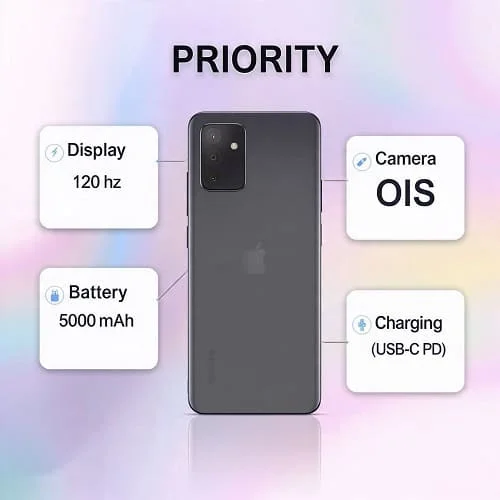
What to prioritize at $300: display, camera, battery, charging
Display: readability + smoothness
- FHD+ resolution is noticeably sharper than HD+ on 6.4–6.7″ screens. If you read a lot or edit photos, prioritize it.
- 90–120 Hz refresh improves scrolling and navigation. OLED/AMOLED adds deeper blacks, better contrast, and lower eye strain at night.
Camera: consistency over megapixels
- Look for a well‑tuned main sensor with good HDR. OIS helps steady low‑light shots and video.
- Ultrawide is useful for travel and group photos; macro/depth lenses rarely matter.
Battery and charging: real‑world rhythm
- 5,000 mAh is typical; expect a day of heavy use or more. Fast charging (25–67 W) shortens breaks between sessions.
- For battery health over time, avoid constant 0–100% cycles. See practical guidance from Battery University.
Software, updates, and privacy essentials
Updates keep your phone secure and compatible with new apps. In this price range, many brands offer multiple years of security patches and at least one or two OS upgrades (varies by model and region). A clean interface (like near‑stock Android or well‑optimized skins) helps budget hardware stay snappy over time.
- Security: Keep Google Play Protect enabled and scan apps regularly: Google Play Protect help.
- Storage hygiene: 128 GB is a comfy baseline in 2025. If your model supports microSD, store media there and keep apps on internal storage for speed.
- Privacy basics: Review app permissions after setup. Disable or uninstall bloat you don’t use.
Gaming and performance tuning under $300
Expect smooth performance in everyday apps and casual to mid‑tier games. Chips like Snapdragon 7s Gen 2 or well‑tuned Dimensity options handle popular titles at medium settings. For best results:
- Use a balanced graphics preset (Medium/High with 60 fps) to avoid thermal throttling.
- Keep background apps trimmed; 6–8 GB RAM is your friend for multitasking while gaming.
- Enable a game mode if available—it manages notifications and CPU/GPU priorities.
Connectivity and carriers: bands, 5G, Wi‑Fi
Performance isn’t just the chip—it’s also the modem and your network. Under $300, you’ll see sub‑6 GHz 5G (great for coverage and efficiency) rather than mmWave. If coverage is sparse in your area, a strong 4G phone with a better display may feel faster day‑to‑day than a weak 5G model.
- 5G expectations: Entry/mid 5G is about efficiency and stable throughput, not record speeds. For a deeper industry view, explore the GSMA 5G Spectrum Guide.
- Wi‑Fi matters too: If your router supports it, Wi‑Fi 6 improves stability in crowded homes. Learn more: Wi‑Fi Alliance.
- Band check: Always match the phone’s LTE/5G bands to your carrier’s list. For travelers, verify destination country bands.
- Dual SIM / eSIM: Many models offer dual SIM or eSIM; useful for travel and separating work/personal lines.
Buying tips, price watch, and warranty
- Best times to buy: Seasonal promos (back‑to‑school, Black Friday, regional shopping festivals) and carrier deals.
- Storage tiers: Go for 128 GB or more if you film videos. If microSD is supported, use it for media, not apps.
- Warranty & region: Avoid gray imports without a manufacturer warranty or mismatched bands/chargers.
- Open‑box/refurb: Can be excellent value—ensure a return window and battery health guarantee.
- Charger in the box: Not all phones include one. If you need a new charger, look for USB‑IF certified USB‑C Power Delivery gear: USB‑IF USB‑C PD.
New phone setup checklist (speed, battery, privacy)
- Update first: Install system updates before adding apps. This often improves performance and stability.
- Trim bloat: Uninstall or disable duplicate apps (two browsers, two galleries). Fewer resident apps = smoother budget phones.
- Display tuning: Switch to 90/120 Hz if disabled by default. Set adaptive brightness and a comfortable color profile.
- Battery care: Use adaptive battery settings, avoid constant 0–100% cycles, and prefer partial top‑ups when convenient.
- Privacy & security: Turn on Play Protect, review permissions, enable Find My Device, and add a screen lock + biometrics.
- Backup plan: Enable automatic photo backups (e.g., Google Photos) and app/data backups to make future upgrades painless.
$200 vs $300: when to stretch or save
That extra $50–$100 can unlock a brighter OLED, more RAM, faster storage, steadier cameras with OIS, stereo speakers, and often a longer update promise. If you care about camera quality, display smoothness, or plan to keep your phone 2–3+ years, the Best Phones Under $300 (2025) category is a smarter long‑term buy than most sub‑$200 models.
On the other hand, if your needs are basic (calls, social, messaging, light navigation), a well‑chosen under‑$200 device can still feel great—see our companion guide: Best Phones Under $200 (2025): Top Picks & Guide.
FAQs: Best Phones Under $300 (2025)
Are $300 phones good enough for photography?
Yes—if you pick a model with a well‑tuned main sensor and strong processing (e.g., Samsung A‑series, Pixel 6a on sale, POCO/Redmi models with good HDR). OIS is a bonus for low light and video stability.
Should I prioritize 5G in this price range?
If your area has reliable 5G and you stream/hotspot often, yes. Otherwise, a better OLED and more RAM can improve daily experience more than entry‑level 5G.
How much RAM and storage should I get?
Aim for 6–8 GB RAM and 128 GB storage. If your phone supports microSD, use it for photos and videos; keep apps on internal storage for speed.
What about Wi‑Fi performance?
Wi‑Fi 6 (802.11ax) improves performance in busy homes if both your phone and router support it. It’s a meaningful upgrade for streaming and downloads.
Do these phones receive updates for long?
Policies vary by brand and region. Many 2024–2025 models offer multiple years of security patches. Check the product page for your specific variant’s update commitment.
Can I game on a $300 phone?
Definitely—expect Medium/High settings at 60 fps in popular titles, with occasional tweaks for stability. Keep background apps minimal for best results.
What charger should I buy if the box is empty?
Choose a reputable USB‑C Power Delivery charger that meets your phone’s supported wattage and safety standards. The USB‑IF’s USB‑C PD program is a good reference.
Conclusion
The Best Phones Under $300 (2025) deliver real, everyday wins: bright 90–120 Hz displays, cameras that don’t embarrass in low light, battery life you can trust, and charging that fits your routine. Use the quick picks and comparison table as your shortlist, verify your local variant’s bands and specs, and watch periodic promos to land an even better price. With a careful setup and smart charging habits, your sub‑$300 phone can stay fast, secure, and enjoyable well into 2026.
References and further reading:
- GSMA — 5G Spectrum Guide
- Wi‑Fi Alliance — What is Wi‑Fi 6?
- Google Play Protect — help & features
- Battery University — prolonging lithium batteries
- USB‑IF — USB‑C Power Delivery (USB PD)

About the Author
Alex Carter — Founder & Editor‑in‑Chief, GicraMobile
Alex leads GicraMobile’s testing lab and reviews. His methodology focuses on day‑to‑day performance, battery health and thermals, camera consistency, and 5G/LTE reliability—so you can pick the right phone without hype.
Real‑world testing: 90–120 Hz smoothness, idle drain, thermals
Camera checks: HDR, skin tones, low‑light stabilization
Connectivity: band fit, eSIM, VoLTE/VoWiFi, Wi‑Fi performance
You may also like this