Flying into Paris, hopping trains through Italy, or road-tripping between Munich and Prague? If you want fast, reliable mobile data without hunting for a local SIM in every country, this guide is for you. It focuses on Best eSIM for Europe (2025) and shows exactly how to choose the right regional plan, match coverage to your itinerary, avoid “unlimited” pitfalls, and activate an eSIM on iPhone or Android in minutes. You’ll also get practical tips for 5G/LTE expectations across Europe, hotspot rules, data-saving moves, and a pre‑trip checklist so you never run out of gigabytes—or patience.
We’ll keep things brand-agnostic and outcome-driven: you’ll learn what to check (underlying network, fair‑use policy, hotspot allowance, supported countries) and why those details matter on city breaks, cross‑border rail trips, national parks, and packed events. By the end, you’ll know how to pick the best plan for your route and budget—and how to set it up flawlessly.
Table of Contents
Why a Europe eSIM is the best choice in 2025
eSIM is a digital SIM profile you install by scanning a QR code—no plastic, no store queues. For Europe, regional travel eSIMs are designed for multi‑country trips. A single plan can cover dozens of countries, switching networks automatically as you cross borders. The advantages are clear:
- Instant connectivity: Buy on your couch, activate on landing, and go.
- One plan, many countries: Regional eSIMs include most of the EU and popular non‑EU destinations; you don’t need a new SIM in every country.
- Keep your home number active: With Dual SIM/Dual Standby, your home SIM can still receive calls/SMS while your Europe eSIM handles data.
- Transparent pricing: Clear data buckets or date‑based passes help you avoid surprise roaming bills.
Note: The EU’s “Roam Like at Home” rule helps EU residents roaming within the EU with their domestic operator, but it does not automatically apply to visitors using international travel eSIMs. You’ll rely on your eSIM’s own multi-country coverage list and fair‑use policy.

Compatibility: iPhone/Android, unlocking, and updates
Before you buy, confirm three things: device support, carrier unlocking, and software level.
- iPhone: iPhone XS/XR and newer support eSIM; US iPhone 14 and later are eSIM‑only. Ensure your device is unlocked and updated. Apple’s official guide: Use eSIM on iPhone.
- Android: Pixel (3+ in many regions; 4+ widely), Samsung Galaxy S/Note/Flip/Fold, and many modern flagships support eSIM. See Google’s guide: Set up eSIM on Pixel.
- Unlocked device: Contract‑locked phones may reject third‑party eSIMs. Request an unlock from your home carrier if needed.
- Latest updates: Update iOS/Android before activation; older builds can block eSIM install or 5G options.
Coverage reality in Europe: regions, 5G, and LTE
Europe’s networks are excellent overall, but performance varies by country, city, and even neighborhood. Understanding the landscape helps set realistic expectations:
- Western/Northern Europe: Dense 4G/5G in cities and transport corridors; great indoor coverage in most urban areas.
- Southern Europe: Solid city service; some rural/coastal pockets may dip to LTE or 3G remnants (fading fast). Tourist hubs are generally well‑served.
- Central/Eastern Europe: Major cities have fast 5G; smaller towns and rural regions often rely on LTE with good speeds.
- UK and Switzerland: Frequently included in “Europe” eSIMs, but not always—double‑check the country list.
5G in 2025 is widespread in capitals and large cities, with mid‑band 5G (fast + decent range) common. Indoors and deep in old towns, LTE may be more consistent. For policy and network snapshots, the European 5G Observatory is useful: European 5G Observatory.
The 12‑point buyer’s checklist (avoid gotchas)
Use this checklist to compare providers like a pro. It prevents surprises and ensures the plan fits your route and habits.
- Country list: Confirm every country you’ll visit (France, Italy, Germany, Spain, Portugal, UK, Switzerland, Croatia, Greece, etc.).
- Underlying networks: Which MNOs (e.g., Orange/Vodafone/Telefónica/Deutsche Telekom/Three) does the eSIM attach to in each country?
- 5G access: Included or LTE‑only? If 5G is included, are there speed caps?
- Fair‑Use Policy (FUP): “Unlimited” almost always throttles after a threshold. Know the cap and the post‑cap speed (e.g., 1–5 Mbps).
- Hotspot/tethering: Is Personal Hotspot allowed? Is there a separate cap?
- Validity model: Days‑based (e.g., 10/15/30 days) vs data‑based (e.g., 5/10/20 GB). Can you top up without reinstalling?
- Activation rules: Can you install early and start later? Does the timer start on first connection or purchase date?
- APN clarity: Automatic APN is ideal; if manual, the provider should display clear instructions.
- eKYC requirements: Some vendors require ID verification. Ensure you’re comfortable with the process and timeline.
- Support hours: 24/7 chat or fast email response is valuable if you land late and need help.
- Refund policy: Many refund unactivated eSIMs; refunds after activation are rare. Test on arrival.
- Payment and taxes: Check currency, fees, and whether VAT is included in pricing.
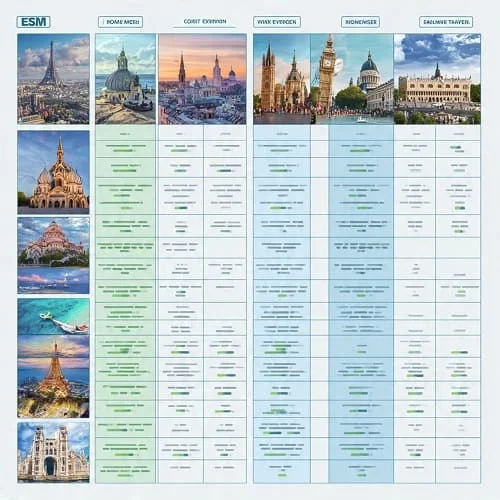
Plan archetypes: pick by trip style
Most Europe eSIMs fall into familiar categories. Pick the archetype that matches your itinerary, then compare providers with the checklist above.
1) City sprinter (3–7 days)
- Who it’s for: Weekend getaways, single‑city stays (Paris, Rome, Amsterdam).
- Sweet spot: 5–10 GB, 5–10 days validity, 5G included where available, hotspot allowed.
- Notes: Indoor coverage matters (museums, hotels). 10 Mbps caps are fine for maps/chat but weak for HD calls.
2) Cross‑border explorer (7–14 days)
- Who it’s for: Rail passes (Eurail/Interrail), car hires, 3–5 countries in one trip.
- Sweet spot: 10–20 GB, 10–15 days validity, multi‑network roaming per country.
- Notes: Ensure UK/Switzerland are included if on your route. Confirm top‑ups are instant.
3) Remote‑work month (15–30+ days)
- Who it’s for: Digital nomads and business travelers balancing calls and travel.
- Sweet spot: 30–60 GB monthly or “unlimited with clear FUP” (e.g., 50–100 GB high speed then throttle).
- Notes: Hotspot allowance is critical. Check congestion performance in city centers or co‑working districts.
4) Budget traveler (pay‑as‑you‑go)
- Who it’s for: Light users prioritizing maps, messages, and bookings.
- Sweet spot: 3–5 GB with cheap top‑ups; LTE or 5G is fine for basic tasks.
- Notes: Watch per‑GB pricing and short validity windows that expire unused data.
5) “Unlimited” maximizer
- Who it’s for: Heavy social/video, constant navigation, many uploads.
- Sweet spot: Explicit FUP with a generous high‑speed bucket; published post‑cap speed; hotspot allowed.
- Notes: If hotspot is banned or speeds are capped at 3–5 Mbps from the start, HD calls and multi‑device work will struggle.
How much data do you need? Pricing benchmarks
Plan sizing depends on your habits. Use these estimates to avoid overbuying or running short mid‑trip.
Daily usage guide
- Light (maps, chat, bookings, socials w/ few videos): ~0.3–0.7 GB/day
- Moderate (socials with short clips, translate, rides, a few video calls): ~1–2 GB/day
- Heavy (HD video calls, streaming, frequent hotspot): ~3–5+ GB/day
Trip‑length examples
- Weekend city break → 3–5 GB
- 10‑day, 3–4 countries → 10–20 GB
- 30‑day remote work → 40–60 GB or “unlimited with clear FUP”
Price sanity checks (typical 2025 ranges)
- 5–10 GB (7–10 days): roughly €12–€25
- 15–25 GB (10–15 days): roughly €18–€35
- 30–60 GB monthly: roughly €25–€60
- “Unlimited” monthly with hotspot: roughly €35–€75 (check FUP and tethering caps)
Reality check: Video calls are more sensitive to consistent 10–20 Mbps than to rare 300 Mbps peaks. If a plan enforces a 5–10 Mbps cap, your maps and messaging will be fine, but HD calls may suffer during congestion.
Install and activate: iPhone and Android steps
Installing an eSIM takes a couple of minutes. You can add it before departure (often recommended) and enable data when you land.
iPhone (iOS)
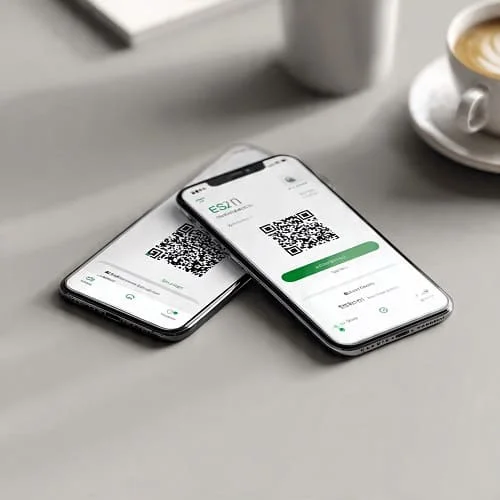
- Purchase your eSIM. Open the provider’s QR code on another screen.
- Go to Settings > Cellular > Add eSIM > Use QR Code, or install via the provider’s app.
- Label the line (e.g., “Europe Data”). Set it as your Cellular Data line.
- In Cellular Data Options, choose 5G Auto (or LTE if you prefer) and confirm Data Roaming is on if your provider requires it.
- APN usually auto‑fills; if not, enter the APN from your provider’s instructions.
Android (Pixel, Samsung, etc.)
- Purchase your eSIM and display the QR code.
- Open Settings > Network & Internet > SIMs (or Connections > SIM manager), tap Add eSIM, and scan the QR.
- Select the eSIM for Mobile data. Enable Data roaming if required by your provider.
- Ensure Preferred network is 5G/LTE Auto. Add the APN if manual entry is needed.
Official device references: Apple: Use eSIM on iPhone and Google: Set up eSIM on Pixel.
Dual‑SIM best practices while traveling
- Home SIM for calls/SMS, Europe eSIM for data: Ideal for 2FA codes and inbound calls while avoiding data roaming fees at home.
- Set “Default Voice Line” wisely: Keep voice on your home SIM if you need your number; otherwise, disable the voice line to avoid accidental roaming.
- Data switching: On iPhone, disable “Allow Cellular Data Switching” if you want to lock data to the Europe eSIM.
- Hotspot use: Confirm tethering rules first; heavy hotspotting drains battery—keep a power bank handy.
Troubleshooting: when data or 5G won’t work
Most issues clear up with a few quick checks:
- No service after install: Toggle Airplane Mode for 10–20 seconds, then off. Reboot if needed. Make sure the Europe eSIM is On and set as the data line.
- Data works but slow: Move outdoors or to a less crowded area. Try a different network in manual network selection if supported by your plan. Disable VPN to test.
- Stuck on LTE: 5G may be weak indoors or not available in that area—set 5G Auto and re‑test elsewhere.
- APN missing: Enter the APN exactly as the provider lists (case‑sensitive sometimes). Save and toggle data off/on.
- Hotspot blocked: Plan may prohibit tethering or require a hotspot APN. Check your provider’s documentation.
Power moves to save data (and money)
- Download offline maps: Preload regions in Google Maps or Apple Maps over Wi‑Fi.
- Lock streaming quality: Cap video at 480p/720p on cellular; allow HD only on Wi‑Fi.
- Backups on Wi‑Fi: Pause cloud photo/video backups on cellular; resume on hotel Wi‑Fi.
- App refresh: Limit background refresh and auto‑play inside social apps.
- Data Saver modes: Enable Low Data Mode (iOS) or Data Saver (Android) to curb background sync.
Sample itineraries and smart plan picks
1) Capitals circuit: Paris → Brussels → Amsterdam (7–9 days)
- Plan: 10–15 GB, date‑based. 5G in all three cities; indoor coverage generally strong.
- Tips: Use Wi‑Fi Calling in hotels; download travel passes and museum tickets offline.
2) Mediterranean duo: Rome → Athens (8–10 days)
- Plan: 10–15 GB; 5G in city centers, LTE in old towns and coastal areas.
- Tips: Offline maps for coastal drives; throttled “unlimited” may struggle with video calls during peak hours—size up if needed.
3) Alpine loop: Munich → Salzburg → Zurich (7–10 days)
- Plan: 10–20 GB; ensure Switzerland is included in the country list.
- Tips: Mountainous terrain can cause variability; cache routes and tickets before journeys.
4) Remote‑work month: Lisbon base + weekend flights
- Plan: 40–60 GB monthly or clear‑FUP unlimited with hotspot allowance.
- Tips: Prioritize consistency over peak speed; test your accommodation with a quick speed check at different times of day.
5) Family rail trip: Berlin → Prague → Vienna (10–12 days)
- Plan: Two separate 10–15 GB eSIMs often beat one unlimited with strict FUP.
- Tips: Enforce downloads on hotel Wi‑Fi. Check that hotspot is allowed if you plan to share to tablets.
Top mistakes to avoid
- Assuming “Europe” includes every country: Always verify the provider’s list (UK, Switzerland, Balkans may be excluded or partial).
- Relying on “unlimited” without details: Hidden caps can throttle to unusable speeds for video calls and map tiles.
- Ignoring hotspot rules: Many plans block tethering entirely or cap it separately.
- Forgetting APN or roaming toggles: A missing APN or data roaming off can look like a dead connection.
- Starting validity too early: Install before departure if allowed, but start usage on arrival to avoid wasting days.
Related: Best eSIM for USA Travel (2025 Guide)
Planning to hop across the Atlantic, too? See this companion guide for U.S. trips: Best eSIM for USA Travel (2025 Guide).
FAQs: Best eSIM for Europe (2025)
Will I get a local European phone number?
Most Europe travel eSIMs are data‑only. Use app‑based calling (WhatsApp, FaceTime, Telegram) or Wi‑Fi Calling tied to your home SIM. Some providers sell voice add‑ons; read the fine print.
Does Roam Like at Home apply to me?
It applies to EU residents roaming within the EU with their domestic carrier. If you’re visiting from outside the EU and using a travel eSIM, your plan’s own country list and FUP govern your roaming—not RLAH.
Is 5G worth it in Europe?
In cities and airports, yes—especially for uploads and video calls. In rural or historic centers, LTE may perform better. Choose plans with 5G access but be ready to fall back to LTE when needed.
Can I install multiple eSIMs?
Yes. Modern phones store multiple eSIM profiles; you can enable one at a time for data. Delete expired profiles to keep things tidy.
What if my data runs out mid‑trip?
Most providers offer instant top‑ups in their app/account portal. Confirm top‑up pricing and whether it extends validity or just adds data.
Will hotspot work?
Only if allowed. Some “unlimited” plans ban hotspot or throttle it separately. If you must tether, choose plans that explicitly permit it and list an allowance.
References and official tools
- European Commission: Roaming in the EU (policy overview)
- European 5G Observatory: Deployments and coverage status
- GSMA: eSIM overview and ecosystem
- Apple Support: Use eSIM on iPhone
- Google Support: Set up eSIM on Pixel
Notes: Plan availability, coverage, and fair‑use policies change often. Always verify the provider’s current country list, hotspot rules, and activation model before purchase. Replace the placeholder image URLs with your final uploads after generating the visuals.

About the Author
Alex Carter — Founder & Editor‑in‑Chief, GicraMobile
Alex leads GicraMobile’s testing lab and reviews. His methodology focuses on day‑to‑day performance, battery health and thermals, camera consistency, and 5G/LTE reliability—so you can pick the right phone without hype.
Real‑world testing: 90–120 Hz smoothness, idle drain, thermals
Camera checks: HDR, skin tones, low‑light stabilization
Connectivity: band fit, eSIM, VoLTE/VoWiFi, Wi‑Fi performance
You may also like this