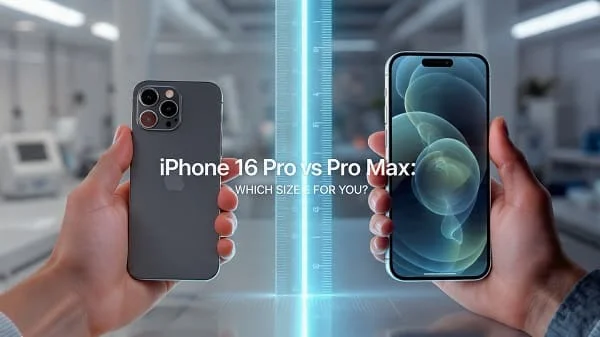
Welcome to our deep iPhone 16 Pro vs iPhone 16 Pro Max comparison. This long, education‑first guide translates specs into real life so you can choose with confidence. We’ll compare in‑hand comfort, displays outdoors, camera flexibility, sustained performance and thermals, battery life, USB‑C workflows, MagSafe/Qi2 charging, and the total cost of ownership. You’ll also get a 10‑minute store checklist, setup tips, and buyer profiles—so whether you’re a creator, traveler, student, or pro, you’ll know which Pro fits how you live and work.
Table of Contents
iPhone 16 Pro vs Pro Max: Why This Comparison Matters
iPhone 16 Pro and iPhone 16 Pro Max share the same core DNA—fast chips, premium screens, Apple’s consistent color science, and tight iOS integration. The meaningful differences usually come down to screen size and battery headroom, plus any generation‑specific camera or stabilization tweaks Apple reserves for the bigger phone. That extra screen area can transform reading, editing, and framing; the larger battery can turn a “just made it” day into a calm one. The goal here is to map those differences to real‑world wins so your money buys the experience you actually want.
Design, Size, and In‑Hand Comfort
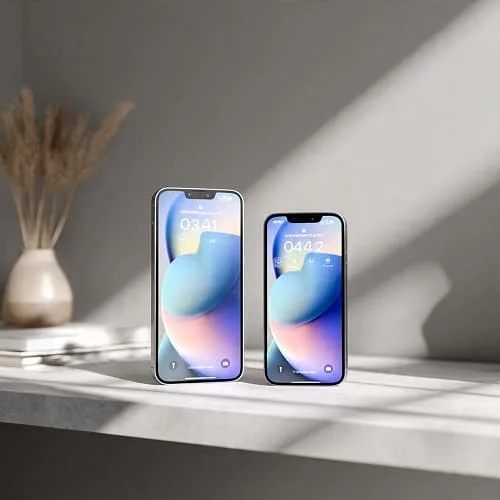
The 16 Pro is the “compact professional”: dense, precise, and pocket‑friendly. The 16 Pro Max is the “portable workstation”: a larger viewfinder and roomier keyboard with more battery to match. Both have premium metal frames, subtle curves that don’t dig into your palm, and crisp button feel. With cases installed, the Max’s footprint and weight are what you’ll notice most—the trade‑off for a more cinematic canvas and greater battery headroom.
- Reach and grip: Pro is easier one‑handed. Pro Max may require a two‑hand stance or grip accessories on the move.
- Desk wobble: Both limit wobble with a tidy camera island. A case with a slight “ramp” around lenses keeps it rock‑solid.
- Pocket feel: The Pro disappears into most pockets. The Pro Max will remind you it’s there—but rewards you every time you read or edit.
Displays: Brightness, Smoothness, Eye Comfort
Both Pros deliver Apple’s hallmark color accuracy, crisp text, and premium smoothness. The Max’s larger panel changes comfort: bigger text at the same content density, easier split‑view multitasking in supported apps, and a more immersive video canvas.
- Outdoor readability: Auto‑boosted peak brightness on both keeps content legible under noon sun. Test near a storefront window to judge reflections.
- Refresh and fluidity: Pro‑level smoothness makes scrolling and UI transitions feel “buttery.” You’ll notice it most when jumping between heavy apps.
- Eye comfort: True Tone and Night Shift reduce harsh whites under warm lights. If you’re sensitive to flicker, try mid‑brightness in a dim aisle to check comfort.
To compare official specs and dimensions at a glance, use Apple’s comparison tool: Apple: iPhone Compare.
Cameras: Lenses, Color, Low‑Light, and Reach
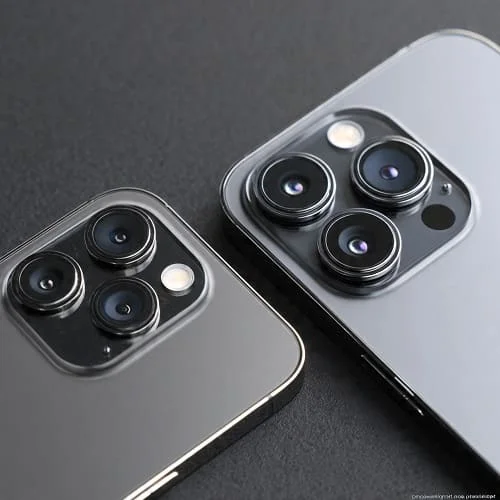
Apple’s photo philosophy is consistent across the Pro line: natural color, reliable skin tones, and highlight control that protects skies and faces. The main camera is where the magic happens—use it whenever possible. The biggest practical difference you’ll feel day‑to‑day is reach if the Pro Max carries a longer tele (as Apple has sometimes done in recent generations). Even when both models share the same tele, the Max’s larger viewfinder makes composing and reviewing a touch more comfortable.
- Portraits: Step back and use 2×–3× for flattering compression and tidy backgrounds.
- Low light: Brace against a railing or table, lock focus/exposure, and let the phone gather light rather than forcing a bright, noisy frame.
- Consistency across lenses: Apple prioritizes color matching. Faces stay believable under mixed lighting on both models.
For independent context on camera behavior across phones, see DXOMARK’s running evaluations: DXOMARK: Smartphones.
Video Features for Creators
Video remains an Apple strength: stable exposure, excellent stabilization, and clean audio pickup. For daily clips, both phones are overkill (in the best way). For creators, the differences that matter most are ergonomics and endurance: the Max’s larger body can feel steadier and run cooler for longer takes, and the big screen is a better monitor. Both offer pro‑leaning formats and external SSD recording via USB‑C, making entire mobile workflows practical.
- Everyday settings: 4K30 for quality and manageable heat; 1080p60 for action and reduced rolling shutter.
- Pro workflows: Shoot on the phone, offload to SSD, and grade later. The Max’s larger viewfinder is genuinely nicer for framing and checking focus peaking.
Official Pro pages list codec support and I/O details: Apple: iPhone 16 Pro.
Performance, Thermals, and On‑Device AI
Both Pros are fast to the point of transparency: apps open instantly, editing is fluid, and on‑device AI tasks (speech, subject isolation, image cleanup) happen with little to no perceived lag. Under sustained load—long 4K, extended gaming, batch edits—the Max’s larger chassis can dissipate heat more comfortably, staving off throttling a bit longer. The practical difference is not night‑and‑day, but creators who push devices will notice it.
- Invisible wins: Auto‑transcriptions with fewer corrections, instant subject cutouts, and better search feel like small upgrades—until you use them all day.
- Game sessions: For marathon play, cap frame rate slightly and keep brightness sensible; both Pros stay calmer that way.
Battery Life, Charging, and MagSafe/Qi2
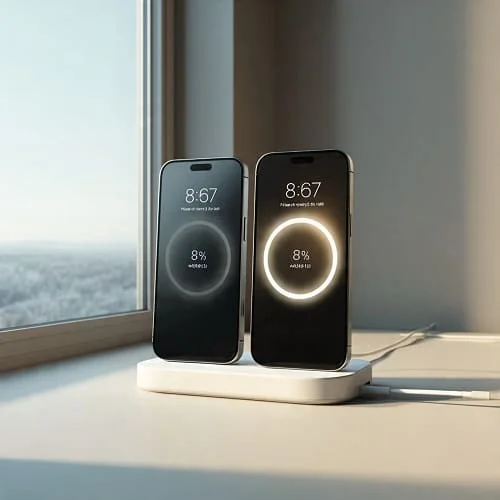
All‑day battery is the baseline. The iPhone 16 Pro Max typically goes farther—more camera time, more navigation, more video—before you need a top‑up. If you end most days above 30% on compact phones, the Pro will suffice; if you often dip into the teens, the Max’s headroom pays dividends in calmness. Magnetic alignment (MagSafe/Qi2) makes desk and car charging more reliable on both.
- Optimized Charging: Turn it on to reduce battery wear over years. Apple’s battery guide explains the why: iPhone Battery and Performance.
- USB‑C: Fast, simple, universal—charge, tether, and transfer with one port. Review capabilities here: About the USB‑C connector on iPhone.
- MagSafe/Qi2 tips: Use certified chargers and centered rings to maintain speeds and grip. Apple’s overview: About MagSafe chargers.
Connectivity, Storage, and USB‑C Workflows
5G, Wi‑Fi, and Bluetooth are excellent on both, with steady hand‑offs and strong accessory support (watches, earbuds, trackers). The biggest differentiator for power users is wired data rates and comfort recording directly to external SSDs—both supported across the Pro line. If you routinely move large ProRes clips or multi‑gig projects, you’ll feel the time savings immediately.
- Storage reality: 128 GB fills fast if you shoot 4K; 256 GB is the practical starting point for creators. Bigger tiers hold value better at resale.
- Travelers: eSIM flexibility is liberating—add a local plan without swapping trays or searching for a paper clip.
Speakers, Haptics, and Call Quality
Both iPhone 16 Pro and Pro Max deliver crisp stereo output with clear dialogue and pleasant warmth for music. Haptics remain best‑in‑class: clean, quiet, and precise, especially noticeable when typing. Noise suppression on calls is strong; rotate the bottom mic toward your mouth in wind or noisy streets.
Durability, Repairability, and Longevity
Premium frames and robust glass, tight tolerances, water/dust resistance, and years of software support make either Pro a long‑term bet. If you keep phones 3–5 years, battery replacements and widely available service extend life meaningfully. Cases and protectors are plentiful; pick a hybrid case (TPU edges + PC back) with a raised camera lip and a full‑adhesive tempered glass protector for the screen.
Price, Value, and Total Cost of Ownership
The Pro Max typically commands a premium over the Pro. The question isn’t “which is faster?”—both are. It’s “which saves me more time and friction?” If your day involves long maps sessions, big video captures, split‑view work, and you simply love a big canvas, the Max’s premium buys real comfort. If you prefer pocketability and already end most days with battery to spare, the Pro gives you nearly everything for less.
For a broader look at how the standard iPhone line compares to the Pro tier, read our buyer’s guide: iPhone 16 vs iPhone 16 Pro: Which Should You Buy?
Which One Fits You? Buyer Personas
1) The Daily Creator
- Pick: iPhone 16 Pro Max
- Why: Larger screen for framing and editing, more battery for long shoots, and steadier thermals for extended 4K.
- Setup: USB‑C SSD, compact USB‑C mic, MagSafe stand charger, and a grippy case with centered ring.
2) The Pocket‑First Professional
- Pick: iPhone 16 Pro
- Why: All the pro features with a size that disappears in a blazer or jeans—and fewer two‑hand moments on the go.
- Setup: 256 GB minimum, slim case, tempered glass, Qi2 desk charger.
3) The Traveler/Parent
- Pick: iPhone 16 Pro Max if you love big maps and long days; otherwise, iPhone 16 Pro
- Why: Max’s extra screen and battery calm travel stress; Pro’s pocketability is better for playgrounds and transit.
4) The Gamer
- Pick: iPhone 16 Pro Max
- Why: Bigger canvas, cooler long sessions. Cap FPS slightly and drop brightness for marathon play.
10‑Minute Store Checklist
- One‑hand test: Walk and type a paragraph on each; note stretch and grip comfort.
- Outdoor readability: Load a white page and stand near a window; judge reflections and auto‑boost.
- Portrait at 2×: Check skin tones and background separation.
- Low‑light aisle shot: Look for noise vs detail retention.
- Video pan: 10‑second pan past windows; watch exposure transitions and stabilization.
- Thermal poke: Record 4K for 2 minutes; feel for even warmth vs hot spots.
- Audio: Play a podcast and song; listen for clarity and stage.
- Keyboard comfort: Max’s larger keys vs Pro’s reach—what feels natural?
- Magnetic snap: Try a MagSafe/Qi2 puck; ensure confident alignment on your case.
- Weight reality: Pocket each with a case; which one disappears, which one you notice?
Common Buying Mistakes to Avoid
- Choosing by peak benchmarks: Sustained performance and thermals matter more in real life.
- Under‑buying storage: 4K video and offline media eat base tiers; 256 GB is comfortable for most Pro buyers.
- Ignoring accessory fit: Thick cases and off‑center rings slow wireless charging and weaken mounts.
- Forgetting ergonomics: If you never loved big phones, the Max’s endurance won’t fix that—choose Pro.
Pro Tips: Setup, Camera, Battery
Setup
- Create Work and Personal Focus modes; allow VIPs and silence the rest. Add a Fitness/Travel Focus if relevant.
- Use Back Tap for fast Camera or Voice Memos access when your hands are full.
- Add a Lock Screen with widgets (calendar, weather, battery) to reduce unlocks.
Camera
- Enable grid lines for straighter horizons; use level indicators indoors for clean verticals.
- Lock AE/AF with a long press; slide the sun icon to protect highlights in backlit scenes.
- For low light, brace the phone and use a 2‑second timer for tack‑sharp frames.
Battery
- Enable Optimized Charging; avoid heat traps (thick blankets, hot dashboards).
- Audit Background App Refresh and location permissions quarterly.
- Use certified USB‑C PD chargers and short braided cables for cooler, faster top‑ups.
FAQs
Is the only difference screen size and battery?
Often the headline differences are display size and battery headroom; some generations give the Max extra camera reach or stabilization. Always verify on Apple’s compare page.
Does the Max camera always beat the Pro?
Not always—both share Apple’s tuning. If the Max has longer tele, you get more reach; otherwise, output is very similar in most light.
Which one lasts longer per charge?
Pro Max typically, thanks to a larger cell and heat distribution. Your usage still dominates outcomes.
Are they both good for video?
Yes—both are excellent. The Max is nicer ergonomically for long takes and on‑phone review; both support pro‑leaning formats and external SSDs via USB‑C.
Do I need special chargers?
Use certified USB‑C PD bricks and Qi2/MagSafe‑certified pads for safe, consistent speeds.
Verdict
If you want a pocket‑friendly professional tool that vanishes in your hand yet handles serious work, choose the iPhone 16 Pro. If you crave a larger viewfinder for framing, more comfortable typing, calmer thermals under sustained load, and bigger battery headroom, choose the iPhone 16 Pro Max. Either way, get enough storage (256 GB minimum for creators), add a slim, grippy case with a centered magnetic ring, and install a full‑adhesive tempered glass protector. That setup will feel premium every day, for years.
Helpful references (official and trusted):
- Apple: iPhone 16 Pro
- Apple: iPhone Compare (official specs)
- Apple Support: About the USB‑C connector on iPhone
- Apple Support: About MagSafe chargers for iPhone
- Apple Support: iPhone Battery and Performance
- DXOMARK: Smartphone cameras
Related comparison for shoppers deciding between tiers: iPhone 16 vs iPhone 16 Pro: Which Should You Buy?

About the Author
Alex Carter — Founder & Editor‑in‑Chief, GicraMobile
Alex leads GicraMobile’s testing lab and reviews. His methodology focuses on day‑to‑day performance, battery health and thermals, camera consistency, and 5G/LTE reliability—so you can pick the right phone without hype.
Real‑world testing: 90–120 Hz smoothness, idle drain, thermals
Camera checks: HDR, skin tones, low‑light stabilization
Connectivity: band fit, eSIM, VoLTE/VoWiFi, Wi‑Fi performance
You may also like this