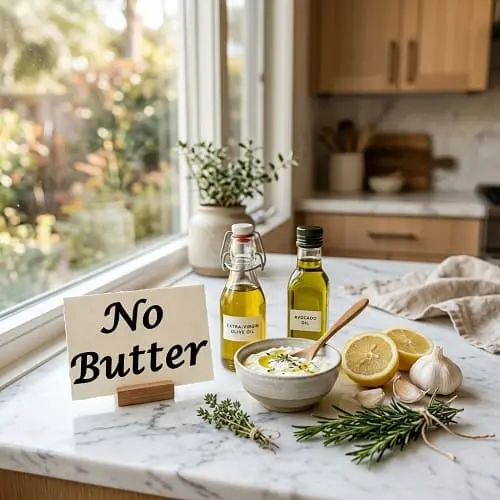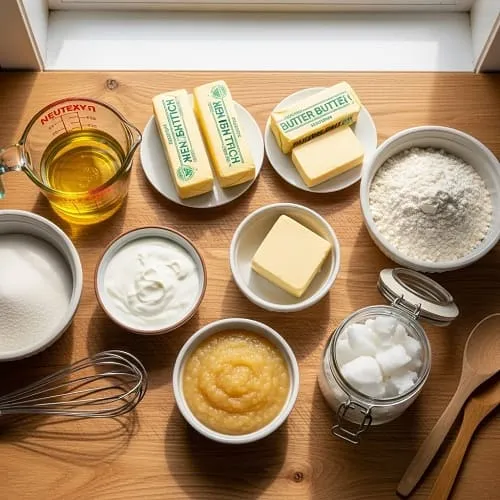
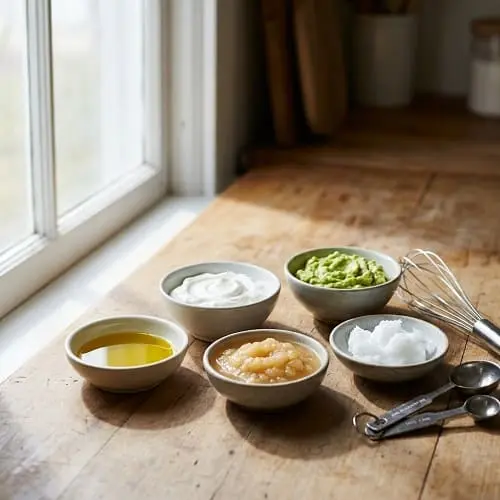
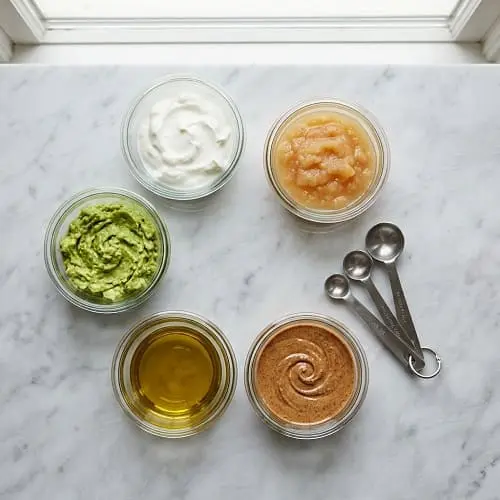
Healthy substitutes for butter in baking include olive or avocado oil, Greek yogurt, unsweetened applesauce, mashed avocado, and nut butters. The best choice depends on what you’re baking: oils keep cakes tender, yogurt adds protein and moisture, and fruit purées cut calories but can make textures denser. Start by swapping half the butter first.
Table of Contents
Why So Many Bakers Are Looking for a Healthier Butter Swap
If you’ve ever pulled a tray of cookies from the oven and thought, “These are perfect… but do they really need that much butter?”—you’re not alone. In my kitchen (and across a lot of American home kitchens), more people are baking for everyday life: lunchbox muffins, weeknight banana bread, “just-one-square” brownies. And when baking becomes a habit, you start caring about what’s in it.
The good news: you can absolutely bake delicious treats with a healthy substitute for butter in baking. The even better news: you don’t have to sacrifice flavor or texture if you choose the right swap for the right job—and use the right ratio.
What Butter Actually Does in Baking (So You Can Replace It Smartly)
Butter isn’t just “fat.” It’s a multitasker, and knowing why it works helps you replace it without guessing.
1) Flavor (that classic buttery taste)
Butter brings a rich, creamy flavor that’s hard to fake. Some substitutes (like olive oil or nut butter) add their own flavor, which can be a bonus if it matches your recipe.
2) Texture and tenderness
Butter coats flour proteins, slowing gluten formation and keeping baked goods tender instead of tough.
3) Structure and lift (especially when creamed)
When you cream butter with sugar, you trap tiny air pockets. That air expands in the oven, helping cakes and cookies rise and bake up lighter.
4) Moisture (butter contains water)
Butter is roughly 80% fat and 15–18% water. Many swaps are either all fat (oil) or mostly water (applesauce/yogurt). That difference matters.
5) Browning
Butter helps browning and that “bakery” aroma. Some substitutes brown less, so you may rely more on vanilla, spices, or a touch of extra salt to round out flavor.
If you want a quick overview of swaps and baking ratios, this guide pairs really well with what you’re reading now: Butter Substitute for Baking (Best Swaps + Ratios).
The Best Healthy Substitutes for Butter in Baking (With Practical Ratios)
Below are the butter alternatives I reach for most often—along with where they work best and how to use them without ending up with dry cake or gummy muffins.
1) Olive Oil (or Avocado Oil): The Easiest “Healthy Fat” Swap
If you want a simple, pantry-friendly switch, oil is usually the smoothest transition. Oils are mostly unsaturated fats, and in many recipes they create a moist, tender crumb.
- Best for: quick breads, muffins, snack cakes, brownies, some cookies
- Flavor note: use light olive oil for neutral taste; extra-virgin can be amazing in citrus cakes or chocolate bakes
- Texture note: oil won’t “cream” like butter, so cookies may spread more and cakes may be slightly denser (still delicious)
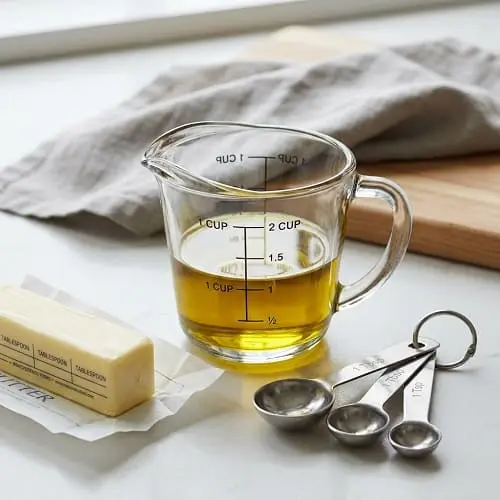
Ratio (butter to oil): Use about 3/4 cup oil for 1 cup butter. That’s because butter contains water and milk solids, and oil is 100% fat.
2) Plain Greek Yogurt (or Skyr): High-Protein Moisture Without the Grease
Greek yogurt is my go-to when I want baked goods to feel satisfying (and not like a compromise). It adds protein and a subtle tang that plays beautifully with vanilla, berries, lemon, and warm spices.
- Best for: muffins, snack cakes, banana bread, coffee cake
- Texture note: too much yogurt can make a bake feel “tight” or slightly gummy—especially in cookies
Ratio tip: For best results, replace up to half the butter with Greek yogurt 1:1. If you want to replace more than half, add a little oil (1–2 tablespoons per cup of yogurt used) to keep tenderness.
3) Unsweetened Applesauce: Lower-Calorie, Great for Moist Cakes (When Used Right)
Applesauce is popular for a reason: it’s easy, affordable, and it works—especially in spiced or chocolate recipes where butter flavor isn’t the star.
- Best for: muffins, quick breads, spice cakes, brownies
- Watch-outs: can make textures denser and more “steamed” if you replace all the butter
Best practice: Replace half the butter with applesauce 1:1 for a healthier result that still tastes like a treat. If you replace all the butter, consider adding an extra egg yolk (structure) or a tablespoon of oil (tenderness), depending on the recipe.
If your main goal is reducing calories specifically, you’ll also like: low calorie substitute for butter in baking.
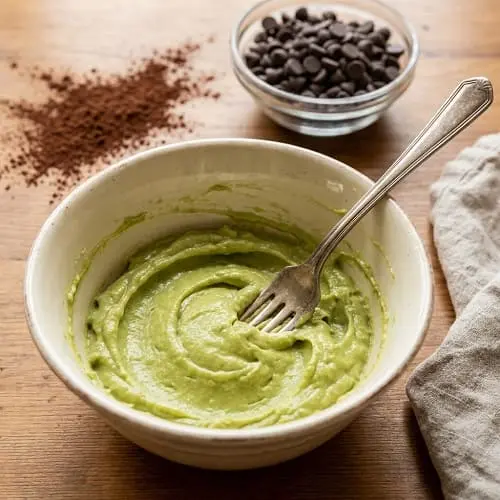
4) Mashed Avocado: Creamy, Nutrient-Dense, Surprisingly Good in Chocolate
Mashed avocado brings creamy richness with a more nutrient-dense profile than butter. The trick is using it where its color and subtle flavor won’t fight you.
- Best for: brownies, chocolate muffins, dark chocolate cookies, some quick breads
- Flavor tip: pair with cocoa powder, espresso powder, or strong vanilla
- Color tip: it can tint light batters slightly green
Ratio: Try 1:1 replacing butter by volume, but start with a 50% swap if you’re baking something delicate (like vanilla cake).
5) Nut Butter (Almond, Peanut, Cashew): Rich, Filling, and Fantastic for Cookies
Nut butters bring healthy fats plus a naturally “satisfying” feel—perfect when you want one cookie to actually feel like enough.
- Best for: cookies, bars, blondies, some brownies
- Watch-outs: can make bakes thicker/denser; natural nut butters vary a lot in oil content
Ratio: Start with a 1:1 swap for half the butter. If the dough seems dry, add 1–2 teaspoons of milk (dairy or non-dairy). If it seems oily, chill the dough 30–60 minutes before baking.
6) Coconut Oil: A Solid 1:1 Swap (But Not Always “Lower Fat”)
Coconut oil behaves more like butter because it’s solid at room temperature. That makes it an easy swap structurally—especially for cookies.
- Best for: cookies, crusts, granola bars, vegan baking
- Health note: coconut oil is high in saturated fat; it can still be a good butter alternative for dairy-free baking, but it’s not automatically “lighter”
Ratio: Usually 1:1 for butter. Use refined coconut oil if you don’t want coconut flavor.
7) “Half-and-Half” Blends: My Favorite Trick for Better Results
If you want healthier baking and you’re picky about texture (same), blends are the secret.
- For cakes/muffins: 50% butter + 50% Greek yogurt
- For brownies: 50% butter + 50% mashed avocado (or applesauce)
- For cookies: 50% butter + 50% coconut oil (great structure) or 50% butter + 50% nut butter (great chew)
Butter Substitute Ratio Chart (Quick Reference)
Use this as a starting point, then adjust based on your batter/dough texture.
| Instead of… | Use… | Best in… | Notes |
|---|---|---|---|
| 1 cup butter | 3/4 cup olive or avocado oil | Cakes, muffins, brownies | May increase spread in cookies |
| 1 cup butter | 1 cup Greek yogurt (replace up to 1/2 butter first) | Quick breads, snack cakes | Too much can make crumb tight |
| 1 cup butter | 1 cup unsweetened applesauce (best as 1/2 swap) | Spice cakes, muffins | Can reduce browning, add vanilla/spice |
| 1 cup butter | 1 cup mashed avocado | Chocolate bakes | Color can shift in light batters |
| 1 cup butter | 1 cup coconut oil | Cookies, crusts | Choose refined for neutral flavor |
| 1 cup butter | 1 cup nut butter (start with 1/2 swap) | Cookies, bars | Chill dough if it spreads |
Best Butter Substitutes by What You’re Baking
For Cookies
Cookies are where butter matters most because it affects spread, chew, and that classic flavor. If you want “healthier” without losing the cookie vibe:
- Best picks: coconut oil (structure), nut butter (chew), half butter + half oil
- Pro tip: chill the dough. Healthier fats (or wetter substitutes) often spread more.
For Cakes and Cupcakes
Cakes are more forgiving. Oil and yogurt shine here.
- Best picks: olive/avocado oil, Greek yogurt (partial swap), applesauce (partial swap)
- Pro tip: if you use yogurt/applesauce, don’t overmix—mix just until combined for a tender crumb.
For Muffins and Quick Breads
This is the easiest category to lighten up without anyone noticing.
- Best picks: Greek yogurt, applesauce, pumpkin purée, oil
- Pro tip: add a sprinkle of coarse sugar on top for that bakery finish, even with less butter.
For Brownies
Brownies can handle rich swaps like avocado or yogurt, especially with cocoa doing the heavy lifting.
- Best picks: mashed avocado (partial or full), oil, Greek yogurt (partial)
- Pro tip: slightly underbake and cool completely—healthier brownies improve as they set.
For Pie Crust and Biscuits
These rely on solid fat for flaky layers. If you remove butter entirely, texture changes fast.
- Best picks: coconut oil (solid), a high-quality plant-based butter, or a half butter + half coconut oil blend
- Pro tip: keep everything cold. Warm fat = lost flake.
Step-by-Step: How to Swap Butter Without Ruining the Batch
When you’re adapting a favorite recipe, this simple process saves a lot of disappointment.
- Start with a 50% swap. Replace half the butter first. If you love the results, increase the swap next time.
- Match the form when it matters. For cookies and crusts, choose a solid fat (coconut oil or a plant-based butter). For muffins and cakes, liquid oil or yogurt works beautifully.
- Watch the batter consistency. If it looks looser than usual, reduce other liquids by 1–2 tablespoons. If it looks too thick, add a splash of milk.
- Plan for less browning. Applesauce and yogurt can bake paler. Use vanilla, cinnamon, or a pinch more salt to keep flavor full.
- Use time as a tool. Chilling dough helps control spread, especially with oil-based swaps.

A Quick Word on “Healthy” Fats (Without the Drama)
“Healthy” can mean different things: lower saturated fat, fewer calories, more nutrients, or simply ingredients that help you feel better day to day. For general nutrition guidance on dietary fats, this Harvard resource is a solid, balanced read: Harvard T.H. Chan School of Public Health: Fats and Cholesterol.
And if you’re curious about how butter and oil behave differently in cakes (from a baking-science angle), King Arthur Baking explains it clearly: Butter vs. Oil in Cakes.
Don’t Forget: Butter Substitutes in Cooking vs. Baking
Cooking is often more flexible than baking (you can taste and adjust as you go). If you’re also swapping butter on the stovetop, bookmark this companion guide: healthy substitute for butter in cooking.
Frequently Asked Questions
What can I use instead of butter in baking?
You can use olive or avocado oil, Greek yogurt, unsweetened applesauce, mashed avocado, nut butter, or coconut oil. The best choice depends on the recipe: oil works well for cakes and muffins, while coconut oil or nut butter is often better for cookies and bars.
Can I use oil instead of butter in baking?
Yes. A common conversion is 3/4 cup oil for 1 cup butter. Oil typically makes cakes and quick breads moist and tender, but cookies may spread more. If switching to oil in cookies, chilling the dough helps a lot.
What is a 1 to 1 butter substitute?
Coconut oil is one of the most reliable 1:1 substitutes by volume because it’s solid like butter. Mashed avocado can also work 1:1 in many recipes (especially chocolate). Greek yogurt and applesauce can be 1:1, but usually perform best when replacing only half the butter.
Will baked goods taste different without butter?
Sometimes, yes—especially in simple recipes where butter flavor is front and center (like shortbread). But in spiced, chocolate, fruity, or strongly flavored bakes, smart substitutes can taste just as satisfying. A touch of vanilla, citrus zest, or cinnamon can help round out flavor.
What’s the healthiest substitute for butter in baking?
For many people, olive or avocado oil is a strong choice because it’s rich in unsaturated fats and works well in cakes and muffins. If you want fewer calories, unsweetened applesauce or Greek yogurt (often as a partial swap) can lighten recipes while keeping them moist.
Final Thoughts: Choose the Swap That Matches the Job
A “healthy substitute for butter in baking” isn’t one magic ingredient—it’s a small set of smart options. If you’re baking muffins for the week, yogurt or applesauce can be a game-changer. If you’re after chewy cookies, coconut oil or nut butter will treat you better than a watery purée. Start with a half swap, take notes, and you’ll dial in results that feel just as bakery-worthy—only a little lighter and a lot more everyday-friendly.
For a deeper ratio guide you can keep open while you bake, revisit: Butter Substitute for Baking (Best Swaps + Ratios).

Hi, I’m Emma! I’m a busy home cook who loves creating quick, delicious recipes that real people can actually make. At GICRA Kitchen, I share easy air fryer meals, high-protein recipes, and meal prep ideas that fit into your busy life. Welcome to my kitchen! About Emma Carter
You may also like this