
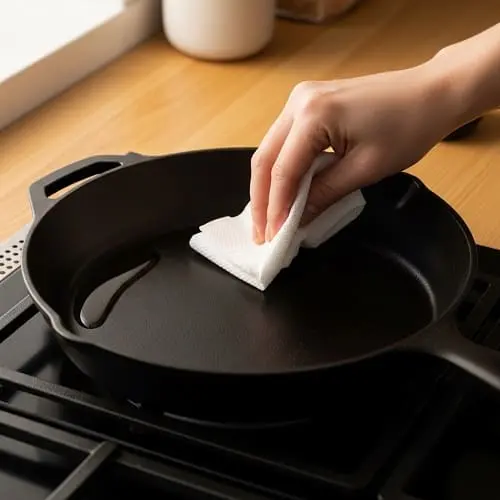
To season a cast iron skillet, clean it thoroughly, dry it completely, rub on an ultra-thin layer of oil, then bake it upside down in a hot oven until the oil polymerizes into a smooth protective coating. Repeat 2–3 times for the best results, and maintain the seasoning by cooking with fat and avoiding long soaks.
Cast iron has a reputation for being “high maintenance,” but here’s the honest truth: once you understand what seasoning is (and what it isn’t), it becomes one of the easiest, most reliable pans you’ll own. The real frustration usually comes from sticky oil, patchy spots, or flaky layers—problems that have simple fixes.
This guide walks you through how to season a cast iron skillet the right way the first time, how to troubleshoot common issues, and how to keep that dark, semi-nonstick surface getting better year after year.
Table of Contents
What “Seasoning” Actually Is (And Why It Works)
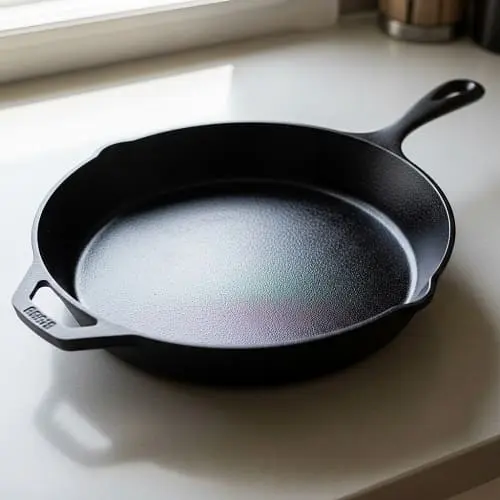
Cast iron seasoning isn’t a spice blend—it’s a thin, baked-on layer of polymerized oil. When oil is heated past a certain point, it transforms into a hard, plastic-like coating that bonds to the metal. That coating:
- Helps prevent rust
- Improves release (your “nonstick” effect)
- Protects the pan from acidic foods and moisture
The biggest mindset shift: seasoning is built in thin layers over time. Thick oil doesn’t create better seasoning—it creates sticky, uneven seasoning.
Before You Start: When Do You Actually Need to Season?
You don’t have to strip and re-season your skillet every time something sticks. Seasoning is often “maintenance,” not “major surgery.” Here’s a quick guide:
- New skillet (factory pre-seasoned): Optional to add 1–2 oven-seasoning rounds for a stronger base.
- Food sticking lately: Usually needs better heat control + a little maintenance seasoning.
- Dull gray spots or rust: Needs cleaning and re-seasoning (at least the affected area).
- Sticky/tacky surface: Needs the sticky layer baked longer/hotter, or stripped lightly and re-seasoned thinly.
- Flaking seasoning: Often too-thick layers or the wrong oil method—consider stripping and rebuilding.
If you want a broader set of cooking fundamentals that make cast iron shine (heat control, browning, pan sauces), this is a great companion read: Cooking Tips and Tricks: 35 Easy Pro Moves.
The Best Oils for Seasoning Cast Iron (What I Use at Home)
You’ll see passionate debates about oils. In real kitchens, what matters most is: use an oil that can handle high heat and apply it in an extremely thin layer.
My top choices
- Grapeseed oil: Neutral, high smoke point, builds an even layer.
- Canola oil: Affordable, easy to find, works well.
- Vegetable shortening (like Crisco): Classic choice for a durable base.
- Avocado oil: Great performance, but usually pricier (not necessary).
A quick note on flaxseed oil
Flaxseed oil can create a hard layer, but it’s also known for flaking in some cases because the coating can become brittle. If you’ve had flaking issues before, I’d skip flax and use grapeseed/canola/shortening instead.
How to Season a Cast Iron Skillet (Step-by-Step)
This is the method I recommend because it’s consistent and beginner-friendly.
What you’ll need
- Cast iron skillet
- Dish soap (yes, it’s fine)
- Stiff brush or scrubber (chainmail scrubber is great)
- Paper towels or a lint-free cloth
- Neutral oil (grapeseed/canola) or shortening
- Aluminum foil (optional, for oven rack protection)
Step 1: Clean it well
Wash the skillet with warm water and a little dish soap, then scrub off any stuck-on residue. Modern dish soap won’t destroy seasoning—what ruins seasoning is soaking the pan or leaving it wet.
Step 2: Dry it completely (no shortcuts)
Dry with a towel, then put the skillet on the stove over medium heat for 3–5 minutes until it’s fully dry. This drives off moisture hiding in the pores of the iron.
Step 3: Apply a whisper-thin layer of oil
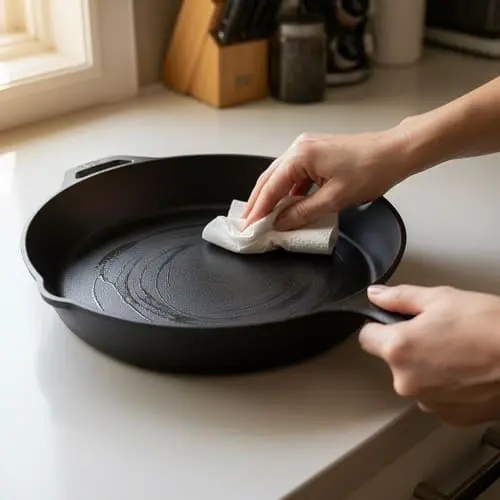
Add a small amount of oil (start with about 1 teaspoon for a 10–12 inch skillet). Rub it over the entire skillet—inside, outside, handle—then wipe it all back off with a clean towel like you made a mistake and you’re trying to erase it.
This is the #1 secret: if it looks oily, it’s too much.
Step 4: Bake upside down
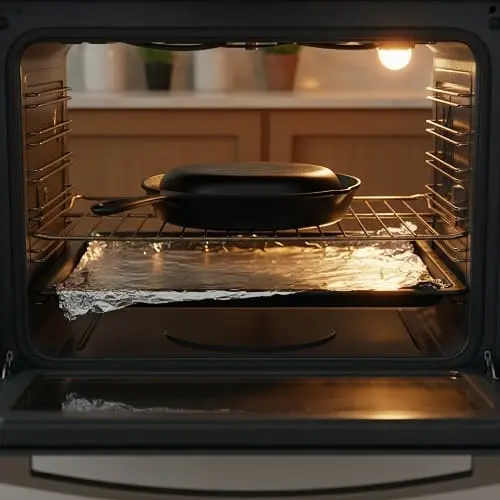
- Preheat your oven to 450°F.
- Place a sheet of foil on the lower rack to catch drips (optional).
- Put the skillet upside down on the top rack.
- Bake for 1 hour.
Step 5: Cool slowly
Turn off the oven and let the skillet cool inside until it’s safe to handle. Slow cooling helps the layer set.
Step 6: Repeat (recommended)
For a stronger base, repeat the oil + bake steps 2–3 times. One round works, but multiple thin coats build a smoother, tougher finish.
Should I Season Cast Iron at 350 or 450?
Most of the time, 450°F is the better choice because it’s hot enough to polymerize common oils efficiently and create a durable coating in about an hour. 350°F can work, but it often needs more time, and some oils may stay tacky if they don’t reach the right temperature for long enough.
A simple rule: choose a temperature near (or slightly above) your oil’s smoke point and keep the coat very thin. If your seasoning comes out sticky, either the layer was too thick or the bake was too cool/short.
What Is the Best Thing to Use to Season a Cast Iron Skillet?
For most home cooks, the best choice is a neutral, high-heat oil you’ll actually keep in your kitchen—grapeseed, canola, or vegetable shortening. The “best” oil matters far less than how thinly you apply it and whether you bake it long enough to fully set.
How Do I Season My Cast Iron for the First Time?
If your skillet is brand new (even pre-seasoned), you can treat “first time” seasoning as a way to build confidence and reinforce the factory layer:
- Wash, scrub, and dry fully.
- Rub on oil, then wipe it back until barely there.
- Bake upside down at 450°F for 1 hour.
- Repeat once or twice if you want a stronger base.
This gives you a more forgiving surface, especially for eggs, fish, and anything prone to sticking.
Watch the Process: Cast Iron Seasoning Video
If you prefer seeing it done, this video walks through the same “thin oil + hot oven” approach and shows what the coating should look like at each step.
Common Seasoning Problems (And How to Fix Them)
Problem: The skillet feels sticky or tacky
Cause: Too much oil or not enough heat/time.
Fix: Put the skillet back in the oven at 450°F for 30–60 minutes. If it’s still sticky, scrub lightly, dry, and re-season with a much thinner coat.
Problem: Seasoning is flaking off
Cause: Thick layers, repeated heavy oiling, or brittle seasoning.
Fix: If flaking is minor, scrub off loose bits and keep cooking (it may stabilize). If it’s widespread, consider stripping and rebuilding with thin coats using a neutral oil.
Problem: Rust spots appeared
Cause: Moisture + time (soaking, air-drying, or storing damp).
Fix: Scrub rust with steel wool, wash, dry on heat, then do 1–2 seasoning rounds. Rust looks scary, but it’s very fixable.
Problem: Food still sticks after seasoning
Cause: Usually heat control, not seasoning thickness.
Fix: Preheat the pan longer, use enough fat, and don’t flip too early. A well-seasoned pan still needs proper technique.
For general flavor-building and technique that makes cast iron cooking feel effortless (especially browning and heat control), you’ll love this: How to Make Food Taste Better (Simple Pro Fixes).
Do You Have to Strip the Pan to Re-Season?
Not usually. If your skillet is mostly fine and just looking dull or sticky in places, a gentle scrub and a couple thin oven-seasoning rounds are enough.
You might consider fully stripping only if:
- The seasoning is peeling in large sheets
- There’s thick, gummy buildup you can’t scrub away
- The surface is uneven and rancid-smelling (old oil buildup)
If you do strip: choose a method you’re comfortable with, follow safety instructions carefully, and re-season with thin coats. (For many people, a strong scrub + repeated thin coats is plenty.)
Everyday Cast Iron Care (This Is Where the Magic Happens)
The best seasoning is the one you maintain without thinking too hard. Here’s a routine that keeps your skillet improving:
After cooking
- Let the pan cool slightly (not stone cold, not blazing hot).
- Rinse with warm water and scrub off residue (a little soap is fine).
- Dry completely.
- Warm on the stove for 1–2 minutes to evaporate moisture.
- Wipe on a tiny drop of oil, then wipe it nearly off.
What to avoid (most of the time)
- Long soaks in the sink
- Dishwasher (hard no)
- Storing it wet or with a tight lid trapping moisture
What to Cook First in a Newly Seasoned Skillet
If you want to “train” the surface, cook foods that reinforce seasoning:
- Bacon (watch for sugar-cured bacon—it can stick)
- Sausage patties
- Roasted chicken thighs (skin-on is great)
- Cornbread
- Fried potatoes
Hold off on delicate eggs as your very first test. Eggs are doable in cast iron, but they’re a technique + seasoning combo. Give the skillet a few fatty cooks first.
Two Trusted Resources (Worth Bookmarking)
If you want to cross-check methods or go deeper, these are solid references:
Frequently Asked Questions
What is the best thing to use to season a cast iron skillet?
A neutral, high-heat oil you can apply thinly—like grapeseed oil, canola oil, or vegetable shortening. The “best” results come from wiping the oil almost completely off and baking long enough for a fully set, dry finish.
Should I season cast iron at 350 or 450?
450°F is generally better for most common oils because it reliably polymerizes the oil into a durable layer in about an hour. 350°F can work but often needs more time and can leave a tacky finish if the oil doesn’t fully set—especially if the coat is too thick.
How do I season my cast iron for the first time?
Wash and scrub the skillet, dry it fully, rub on a very thin layer of oil (then wipe it back), and bake it upside down at 450°F for 1 hour. Let it cool in the oven. Repeat 1–2 times for a stronger base.
Why is my cast iron sticky after seasoning?
Sticky cast iron almost always means too much oil was left on the surface or the pan didn’t bake hot/long enough. Bake again at 450°F for 30–60 minutes, then adjust your next coat to be much thinner.
Do I need to season my cast iron after every use?
No. If the surface is smooth and dark and you’re not seeing rust, you can simply wash, dry, and store it. A tiny wipe of oil after drying is helpful, but full oven-seasoning is only needed occasionally or when the pan is patchy.
Conclusion: A Well-Seasoned Cast Iron Skillet Is Built, Not Bought
Once you nail the basics—clean, dry, thin oil, hot oven, and patience—cast iron becomes incredibly low-stress. Your skillet doesn’t need perfection; it needs consistency. Cook with it often, keep it dry, and touch up seasoning when it looks tired. Over time, you’ll get that deep, slick surface that makes cast iron such a joy for searing, roasting, and everyday cooking.

Hi, I’m Emma! I’m a busy home cook who loves creating quick, delicious recipes that real people can actually make. At GICRA Kitchen, I share easy air fryer meals, high-protein recipes, and meal prep ideas that fit into your busy life. Welcome to my kitchen! About Emma Carter